November 15, 2024 • By Evonix Ventures Team
More Than Just Play
We live in an age of constant stimulation – messages to answer, shows to stream, feeds to scroll. In this whirlwind, the humble deck of cards can feel almost archaic. Yet these simple rectangles continue to captivate us because they offer something screens often cannot: a multi‑layered experience that feeds the mind, calms the nerves and connects us to one another. When you shuffle a deck, you are entering a world governed by rules and randomness, strategy and surrender. You’re joining a lineage of players stretching back centuries, from Mughal emperors and Persian merchants to your own grandparents. Our love for card games is rooted not only in tradition but in the profound benefits they bring.
A Workout for Your Brain
At first glance, laying down cards may not seem like exercise, but your brain knows otherwise. Scientific studies show that engaging in board and card games can bolster cognitive function and reduce the risk of memory decline as we age. Each hand you play calls on your working memory to remember which suits have been played and which remain. Calculating odds and predicting opponents’ moves rely on logical reasoning and pattern recognition. Even casual games ask you to weigh risks and rewards, practise counting and manage limited resources. These mental gymnastics improve neuroplasticity – the brain’s ability to form new connections – which is key to keeping your mind sharp throughout life.
Long‑time card players often report enhanced concentration and strategic thinking in other areas of their lives, from solving everyday problems to making investment decisions. Because card games reward patience and careful observation, they teach you to process information before acting, a valuable skill in our reaction‑driven culture. They also encourage mental flexibility; one moment you’re building the perfect hand, the next you’re adapting to a surprising play. Over time, this adaptability spills over into other domains, helping you remain calm and creative under pressure.
Mindfulness and Stress Relief
Beyond cognition, cards offer a gentle antidote to stress. The repetitive motions of shuffling, dealing and arranging cards can be meditative, inviting you to focus on the present. Like knitters who find serenity in stitching, card players enter a state of flow where anxieties fade and only the game exists. Games that combine strategy with chance – such as Hazari and Twenty‑Nine – remind us to accept what we cannot control while making the best of what we have. In this way, a round of cards becomes a lesson in mindfulness and resilience. It’s no accident that many cultures weave card play into rituals and social gatherings; the shared focus and laughter release endorphins that lower stress hormones and strengthen the immune system.
In clinical settings, therapists sometimes incorporate simple card games to help patients with anxiety and depression practise mindfulness. The act of making decisions in a low‑stakes environment can restore a sense of agency, while the social aspect combats isolation. Even when played online, with friends visible only as avatars, the camaraderie and shared goals provide psychological support. For those juggling hectic schedules, a quick round on a mobile app can serve as a mindful break, centring the mind before diving back into work.
Bridging Generations and Cultures
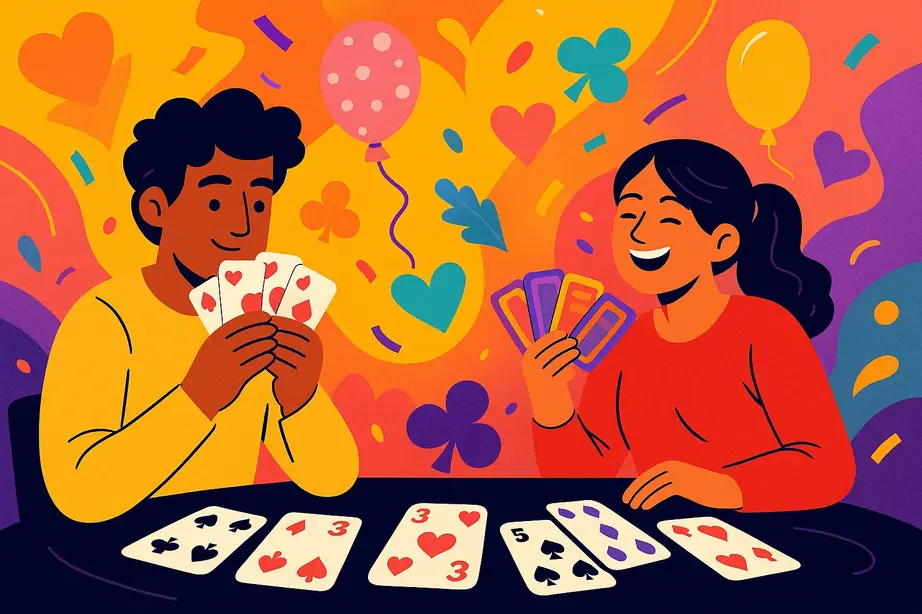
Perhaps the most beautiful thing about card games is their ability to bring people together. A deck is portable and democratic – you don’t need expensive hardware or high bandwidth to enjoy it. Grandparents teach grandchildren how to sort suits and bid, creating shared memories that cross generational divides. Immigrants carry their favourite games abroad, connecting them with their heritage and introducing friends to new traditions. In Bangladesh, India and Nepal, partition games like Hazari or trick‑taking games like Twenty‑Nine turn rainy afternoons into neighbourhood events, with players of all ages laughing, debating and cheering. At family gatherings, card games break the ice between cousins who haven’t met in years, bridging differences in language and life experience.
Even when we meet at the digital table, we remain human. Multiplayer apps allow students studying abroad to play with parents back home or strangers across the world. Emojis and chat translate the banter and playful ribbing of a physical table to the virtual realm. For our studio, preserving this sense of connection is paramount. We see each match as a tiny community, a space where players practise empathy by reading subtle cues and imagining what cards their partners or opponents might hold.
Lessons in Probability and Philosophy
Card games are classrooms disguised as entertainment. Probability – a concept that might seem abstract in school – becomes tangible when you’re calculating the odds of drawing a spade. Risk assessment and resource management emerge when you decide whether to go for a high‑scoring combination or play it safe. In trick‑taking games, you learn to read patterns and predict behaviour, honing your intuition. Games with bidding teach you the value of confidence and restraint, skills applicable when negotiating at work or making big life choices.
On a deeper level, cards mirror life’s interplay of luck and skill. You cannot control the hand you’re dealt, but you can control how you play it. This simple truth underpins philosophies from Stoicism to the Bhagavad Gita. Accepting uncertainty, embracing impermanence and focusing on effort rather than outcome are lessons that resonate far beyond the table. Over time, card players internalise these philosophies, approaching successes and failures with equanimity and humour.
Combating Boredom, Cultivating Presence
We’ve all felt the restless boredom that creeps in during long waits or slow evenings. Card games transform those idle minutes into opportunities for play and learning. Unlike many passive forms of entertainment, cards demand your engagement, making the time feel fuller and more satisfying. Solo games like Solitaire or Spider challenge you to organise chaos, while multiplayer games spark friendly competition. When we developed our mobile versions of Hazari and Twenty‑Nine, we wanted to honour this ability to turn boredom into delight. With adjustable AI levels and quick matchmaking, our apps fit into lunch breaks and train rides without requiring a large time commitment.
Lifelong Learning and Emotional Intelligence
Through card play, we develop skills that extend beyond numbers. We learn to manage emotions – to celebrate wins without gloating, to accept losses with grace and to stay calm when stakes are high. Reading opponents requires empathy and theory of mind, as you infer what others might know or feel. Communication in partnership games enhances clarity and cooperation, teaching us when to signal and when to stay silent. These subtle lessons accumulate over years of play, shaping us into more observant, patient and resilient people.
The iterative nature of card games – shuffle, deal, play, repeat – fosters a growth mindset. No two hands are the same, and each round offers a chance to refine strategies. Unlike many tasks in life that culminate in finality, card games encourage continuous learning. This mindset translates into other domains: players become more open to feedback and more comfortable experimenting, knowing that mistakes are part of the journey.
Why We Build Card Games
At Evonix, we are passionate about bringing the timeless joy of card play into the digital age. Our mission is not just to replicate classic games but to enhance them with fair AI, beautiful art and accessibility features. We design with the knowledge that players are not just looking for distraction – they seek challenge, connection, comfort and meaning. By crafting polished interfaces and respectful monetization models, we honour the centuries‑old tradition of card games while welcoming newcomers. Whether you prefer the cerebral exercise of Hazari, the partnership dance of Twenty‑Nine or the meditative pace of Solitaire, we hope our games become companions in your daily routine.
Conclusion: A Small Deck, a Big World
Card games might be built from simple materials, but they contain worlds within them. They are engines of creativity and community, of philosophy and fun. They sharpen our minds, soothe our souls and tie us to countless others across time and space. In a landscape overflowing with digital entertainment, card games remain refreshingly human. Next time you shuffle a deck or load up one of our apps, pause to appreciate the rich tradition and the many benefits you are embracing. You’re not just passing the time – you’re investing in yourself and in a shared human heritage. See you at the table.
